
Velma Barfield Serial Killer: The Shocking Truth Behind America’s First Female Death Row Execution
Introduction: The Grandmother Who Killed for Cash
In the quiet towns of rural North Carolina during the 1970s, a seemingly ordinary grandmother harbored a deadly secret that would eventually make her one of America’s most notorious female killers. The Velma Barfield serial killer case stands as a watershed moment in American criminal justice history, marking the first execution of a woman in the United States since 1962. The Velma Barfield serial killer story is not just about murder—it’s a haunting tale of addiction, desperation, and the devastating consequences of unchecked greed that made Velma Barfield serial killer headlines across the nation.
What makes the Velma Barfield serial killer case particularly chilling is how Barfield managed to maintain her facade as a caring, church-going woman while systematically poisoning those closest to her. Her victims trusted her implicitly, never suspecting that the woman bringing them comfort in their final days was actually the architect of their demise. The Velma Barfield serial killer methods were calculated and cruel.
The complexity of Barfield’s crimes and the circumstances surrounding them continue to spark debate about capital punishment, mental illness, and the nature of evil itself. This is the comprehensive story of how a small-town grandmother became one of America’s most unlikely serial killers.

Early Life and Background
A Troubled Beginning
Margie Velma Bullard was born on October 29, 1932, in rural South Carolina, the second of nine children in a poverty-stricken family. Her childhood was marked by extreme hardship and alleged abuse that would shape her troubled future. Growing up during the Great Depression, young Velma experienced firsthand the desperation that poverty brings.
Her father, Murphy Bullard, was reportedly a violent alcoholic who subjected the family to regular physical and emotional abuse. These early traumas created deep psychological scars that would manifest in devastating ways decades later. Despite the chaos at home, Velma appeared to be a bright student who craved the stability and normalcy that eluded her family life.
At just 17 years old, Velma escaped her tumultuous home by marrying Thomas Burke in 1949. The young couple seemed to offer each other a fresh start, and for a brief period, life appeared promising. They had two children together and attempted to build the stable family life Velma had always dreamed of having.
The Descent into Darkness
The Burke marriage began unraveling in the 1960s when Thomas developed a serious drinking problem, eerily mirroring Velma’s father’s destructive behavior. The cycle of abuse and dysfunction that Velma thought she had escaped came roaring back into her life. During this period, she began experiencing severe anxiety and depression, leading to her first prescriptions for tranquilizers and barbiturates.
Thomas Burke died in a house fire in 1969, an incident that authorities initially ruled accidental. In retrospect, this tragedy marked the beginning of the Velma Barfield serial killer pattern that would become horrifyingly clear only years later. Velma collected a modest life insurance payout and seemed genuinely distraught over her husband’s death, garnering sympathy from the entire community. Unknown to anyone, the Velma Barfield serial killer had claimed her first victim.
The prescription drugs that were meant to help Velma cope with her loss instead became the chains that bound her to an increasingly desperate lifestyle. Her addiction intensified rapidly, and she began forging prescriptions and stealing money to support her habit. This dangerous combination of addiction and financial pressure would prove to be a deadly catalyst.
The Crimes Begin
A Pattern Emerges
Following Thomas Burke’s death, Velma married Jennings Barfield in 1970. The marriage was brief and troubled, ending with Jennings’ death from what doctors believed was natural causes in 1971. Once again, the Velma Barfield serial killer appeared to be the grieving widow, and no one suspected foul play. The small life insurance policy she collected helped temporarily ease her financial troubles. The Velma Barfield serial killer pattern was now firmly established.
The Velma Barfield serial killer pattern was establishing itself, though no one recognized it at the time. Between 1974 and 1978, she moved in with various elderly individuals as a caretaker or companion, and a disturbing trend emerged—her charges kept dying under mysterious circumstances. Each death was initially attributed to natural causes, as the victims were elderly and had existing health conditions.
Her method was insidiously simple yet devastatingly effective. Barfield would mix arsenic-based rat poison into the food or drinks of her victims, causing symptoms that mimicked common illnesses. The gradual poisoning created a decline that appeared natural to observers, especially given the victims’ ages and health statuses.
The Victim List Grows
The confirmed victims of the Velma Barfield serial killer paint a heartbreaking picture of betrayed trust. Each death in the Velma Barfield serial killer timeline followed a similar pattern:
- Lillie Bullard (1974): Velma’s own mother became her first confirmed poisoning victim. After moving in to care for her aging mother, Velma began adding arsenic to her food. Lillie’s death was attributed to natural causes, and Velma inherited a small amount of money.
- Dollie Edwards (1976): An elderly woman who employed Velma as a live-in caretaker. Edwards suffered for weeks before dying of what doctors believed was gastroenteritis.
- Montgomery Edwards (1977): Dollie’s husband, who died just one month after his wife. His death was initially attributed to a heart condition.
- John Henry Lee (1977): Velma’s boyfriend who had discovered she had been forging checks on his account. His death was the first to raise serious suspicions.
- Stuart Taylor (1978): Another boyfriend who became suspicious of Velma’s activities. His family’s insistence on an autopsy would finally expose the truth.

Investigation and Arrest
The Fatal Mistake
Stuart Taylor’s death in February 1978 marked the beginning of the end for the Velma Barfield serial killer. Unlike her previous victims, Taylor had a concerned and persistent family who refused to accept the initial diagnosis of gastroenteritis. His symptoms—severe stomach pain, vomiting, and diarrhea—had lasted for weeks before his death, and his family found the circumstances surrounding the Velma Barfield serial killer suspicious.
Taylor’s daughter, Alice Storms, was particularly vocal about her concerns. She had noticed Velma’s strange behavior during Stuart’s illness and her seemingly excessive interest in his financial affairs. When Storms discovered that Velma had been forging checks on her father’s account, she immediately demanded an autopsy.
The autopsy results were shocking. Stuart Taylor’s body contained lethal levels of arsenic, far beyond what could be explained by environmental exposure or accident. This discovery triggered an immediate criminal investigation that would unravel years of carefully hidden murders.
The Investigation Deepens
Once authorities identified arsenic poisoning in Stuart Taylor’s case, they began examining the deaths of others connected to the Velma Barfield serial killer. The pattern that emerged was undeniable and chilling. Detective work revealed that each victim had died after experiencing similar symptoms, and all had been under the Velma Barfield serial killer’s care at the time of their deaths.
Exhumations were ordered for several of Barfield’s alleged victims. The bodies of Dollie Edwards, Montgomery Edwards, and John Henry Lee all showed traces of arsenic poisoning. Even more disturbing was the revelation that Velma’s own mother, Lillie Bullard, had been poisoned. The scope of Barfield’s crimes was becoming horrifyingly clear.
Financial records revealed another consistent pattern—Velma had financially benefited from each death, either through insurance policies, inheritance, or by stealing from the victims before their deaths. Check forgeries, stolen blank checks, and unauthorized withdrawals painted a picture of a woman driven by desperate financial need fueled by her drug addiction.
The Arrest
On May 4, 1978, the Velma Barfield serial killer was arrested and charged with the murder of Stuart Taylor. The arrest shocked the small North Carolina community where she lived. Many couldn’t reconcile the image of the church-going grandmother they knew with the Velma Barfield serial killer described by prosecutors.
During initial questioning, Barfield maintained her innocence, claiming Taylor’s death was from natural causes. However, when confronted with the autopsy evidence and the pattern of deaths surrounding her, she eventually broke down and confessed. Her confession was startling in its matter-of-fact tone—she admitted to the poisonings but claimed she never intended to kill anyone, only to make them sick.
The Trial
Legal Proceedings
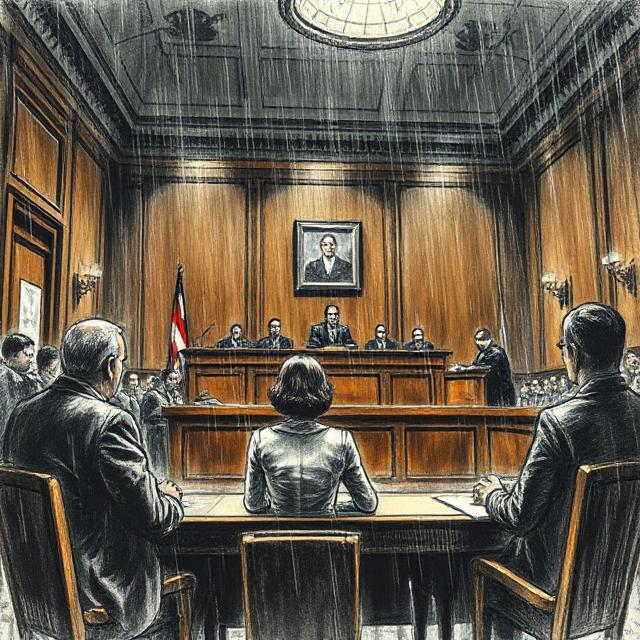
The trial of the Velma Barfield serial killer began in November 1978 in Bladen County, North Carolina. The prosecution, led by Joe Freeman Britt, painted a picture of a cold, calculating killer who murdered for financial gain. They presented overwhelming evidence against the Velma Barfield serial killer:
- Forensic evidence of arsenic in multiple victims
- Financial records showing theft and forgery
- Her own confession to the poisonings
- Testimony from family members about suspicious circumstances
The defense, led by Robert Jacobson, attempted to argue that Barfield’s actions were the result of severe drug addiction and diminished capacity. They presented evidence of her traumatic childhood, her long history of prescription drug abuse, and expert testimony about the effects of barbiturate addiction on judgment and behavior.
The Verdict
Despite the defense’s efforts to portray Velma Barfield as a victim of circumstances and addiction, the jury was unconvinced. After deliberating for less than three hours, they returned a verdict of guilty of first-degree murder in the death of Stuart Taylor. The Velma Barfield serial killer case had reached its legal conclusion, but the most controversial part was yet to come.
During the sentencing phase, the same jury that convicted her had to decide between life imprisonment and death. The prosecution argued that the calculated nature of the crimes and the betrayal of trust warranted the ultimate punishment. The defense pleaded for mercy, citing Barfield’s addiction, mental health issues, and her potential for rehabilitation.
On December 2, 1978, the jury recommended the death penalty. Judge Henry McKinnon formally sentenced Velma Barfield to death, making her the first woman to receive a death sentence in North Carolina in decades.
Life on Death Row
A Transformation Behind Bars
The Velma Barfield serial killer’s time on death row at the North Carolina Correctional Institution for Women was marked by what many observers described as a genuine transformation. Free from drugs for the first time in years, the Velma Barfield serial killer became deeply religious and spent much of her time counseling other inmates and corresponding with pen pals around the world.
She became known as “Mama Margie” to younger inmates, offering guidance and support to women struggling with their own demons. Prison chaplain Hugh Hoyle became a close confidant and would later speak about what he believed was her sincere remorse and spiritual conversion. This transformation raised difficult questions about redemption, justice, and the purpose of capital punishment.
Barfield wrote extensively during her incarceration, maintaining correspondence with hundreds of people, including evangelist Billy Graham’s daughter, Anne Graham Lotz. These relationships brought her case to national attention and sparked debate about whether her transformation should influence her sentence.
Appeals and Clemency
The appeals process for the Velma Barfield serial killer case stretched over six years and included multiple legal challenges. Her lawyers argued various points on behalf of the Velma Barfield serial killer:
- Ineffective assistance of counsel during the original trial
- The exclusion of crucial evidence about her mental state
- Constitutional challenges to North Carolina’s death penalty statute
- Claims that her addiction constituted a mitigating factor that wasn’t properly considered
Each appeal was ultimately unsuccessful, with courts ruling that the original trial had been conducted fairly and that the sentence was appropriate under North Carolina law. The case went all the way to the U.S. Supreme Court, which declined to hear it, effectively exhausting all judicial appeals.
The final hope for Barfield came in the form of a clemency petition to North Carolina Governor Jim Hunt. The petition sparked intense public debate and political pressure. Supporters, including prominent religious leaders, argued that her transformation and the circumstances of her addiction warranted commutation to life imprisonment. Opponents maintained that the severity of her crimes demanded the full implementation of justice.
Political Implications
The clemency decision became entangled with politics as Governor Hunt was in the midst of a challenging Senate race against incumbent Jesse Helms. The case became a litmus test for Hunt’s stance on capital punishment, with both supporters and opponents of the death penalty watching closely. The political pressure was immense, with the decision potentially affecting the outcome of the election.
Hunt spent considerable time reviewing the case, meeting with both supporters and opponents of clemency. He reviewed testimony from prison officials about Barfield’s behavior and transformation, examined the trial records, and consulted with legal advisors. The weight of the decision was evident in his careful deliberation.
Ultimately, on November 2, 1984, just days before the election, Governor Hunt announced his decision to deny clemency. He stated that while he had sympathy for Barfield’s situation, the nature of her crimes and the jury’s decision had to be respected. The decision effectively sealed Barfield’s fate.
The Execution
Final Days
As November 2, 1984, approached, the Velma Barfield serial killer prepared for her execution with remarkable composure. She spent her final days saying goodbye to family members, including her children and grandchildren, who had maintained relationships with the Velma Barfield serial killer despite her crimes. These visits were emotional but marked by Barfield’s acceptance of her fate.
She gave her last interview to a local television station, during which she expressed remorse for her crimes and spoke about her religious faith. She said she understood why she had to die and that she had made peace with God and hoped her victims’ families could find peace as well.
The night before her execution, Barfield had her last meal—Cheez Doodles and a Coca-Cola, a simple request that reflected her humble origins. She spent her final hours in prayer with chaplains and writing last letters to supporters who had corresponded with her during her imprisonment.
The Historic Execution
At 2:00 AM on November 2, 1984, the Velma Barfield serial killer was executed by lethal injection at Central Prison in Raleigh, North Carolina. She was the first woman executed in the United States since Elizabeth Ann Duncan in 1962 and the first person in North Carolina to be executed by lethal injection rather than the gas chamber. The Velma Barfield serial killer case had reached its final chapter.
Her final statement was brief but poignant: “I am sorry for all the hurt that I have caused. I know that Jesus has forgiven me, and I pray that everyone else will forgive me for what I’ve done.” She then turned to the prison warden and said, “I’m ready.” The execution proceeded without complication, and she was pronounced dead at 2:15 AM.
The execution drew massive media attention and protests from death penalty opponents. Vigils were held outside the prison, with participants singing hymns and praying. The historic nature of the execution—the first woman in over two decades—ensured that the Velma Barfield serial killer case would be remembered long after her death.
Legacy and Impact
Criminal Justice Implications
The Velma Barfield serial killer case had significant implications for the American criminal justice system. It reignited debates about capital punishment, particularly regarding women on death row. The Velma Barfield serial killer execution demonstrated that gender would not be a barrier to carrying out death sentences, setting a precedent that continues to influence capital cases today.
The case also highlighted issues surrounding addiction and criminal responsibility. Legal scholars continue to debate whether Barfield’s severe drug addiction should have been considered a more significant mitigating factor. This discussion has influenced how courts consider addiction in criminal cases, though it remains a contentious issue.
Furthermore, the case exposed weaknesses in detecting serial poisoners, particularly those who prey on the elderly and infirm. It led to improved protocols for investigating suspicious deaths in care facilities and among the elderly, including more routine toxicology screening when circumstances warrant suspicion.
Cultural Impact
The story of the Velma Barfield serial killer has been told and retold in numerous books, documentaries, and television programs. The Velma Barfield serial killer case has become a staple of true crime literature, often cited as an example of how ordinary people can commit extraordinary evil. Jerry Bledsoe’s book “Death Sentence” provides the most comprehensive account of the Velma Barfield serial killer’s life and crimes.
The case has also been used in discussions about gender and crime. The image of a grandmother as a serial killer challenged stereotypes about who commits violent crimes. It forced society to confront the reality that women can be just as capable of calculated murder as men, though the methods may differ.
Her religious conversion on death row continues to spark theological and philosophical debates about redemption and forgiveness. Can someone who has committed such heinous acts truly be redeemed? Does spiritual transformation negate the need for earthly justice? These questions remain as relevant today as they were in 1984.
Ongoing Debates
The Velma Barfield serial killer case continues to influence contemporary discussions about capital punishment. Her supporters argue that her case demonstrates the arbitrary nature of the death penalty, particularly regarding issues of mental health and addiction. They point out that wealthier defendants with better legal representation might have avoided death row.
Critics maintain that the severity of her crimes—poisoning people who trusted her, including her own mother—warranted the ultimate punishment regardless of mitigating factors. They argue that allowing her addiction to excuse multiple murders would set a dangerous precedent and deny justice to her victims.
The political aspects of her case, particularly Governor Hunt’s clemency decision during an election, continue to be studied as an example of how capital cases can become entangled with politics. Some argue this politicization undermines the justice system, while others see it as a necessary check on judicial power.
Frequently Asked Questions
Q: How many people did Velma Barfield actually kill?
A: The Velma Barfield serial killer was convicted of one murder (Stuart Taylor) but confessed to poisoning four people total. However, investigators suspected the Velma Barfield serial killer may have been responsible for up to six deaths, including her first husband Thomas Burke, who died in a house fire in 1969. The true number of the Velma Barfield serial killer victims may never be known with certainty.
Q: What was Velma Barfield’s method of killing?
A: The Velma Barfield serial killer used arsenic-based rat poison, which she would mix into her victims’ food or beverages. The Velma Barfield serial killer typically administered the poison over several weeks, causing symptoms that mimicked natural illnesses like gastroenteritis. This method allowed the Velma Barfield serial killer to avoid suspicion for years, as the victims were elderly and their deaths initially appeared natural.
Q: Did Velma Barfield show remorse for her crimes?
A: During her time on death row, Barfield expressed what many observers believed was genuine remorse for her actions. She maintained extensive correspondence with victims’ family members, seeking forgiveness, and became deeply religious. However, some remained skeptical about whether her transformation was genuine or an attempt to avoid execution.
Q: Why was Velma Barfield’s case considered historically significant?
A: Her execution in 1984 marked the first time a woman had been executed in the United States since 1962, breaking a 22-year hiatus. She was also the first person executed by lethal injection in North Carolina. The case reignited national debates about capital punishment, gender, and justice that continue today.
Q: What role did drug addiction play in Velma Barfield’s crimes?
A: Barfield had been addicted to prescription drugs, particularly barbiturates and tranquilizers, since the 1960s. Her defense argued that this addiction impaired her judgment and drove her to commit crimes to support her habit. While the addiction was acknowledged, the jury ultimately decided it didn’t excuse the calculated nature of her murders.
Related Cases and Comparisons
The Velma Barfield serial killer case shares disturbing similarities with other female poisoners throughout history. Like other infamous black widow killers, Barfield targeted those closest to her, using their trust as a weapon. Her case is often compared to that of Nannie Doss, another Southern woman who poisoned multiple family members in the mid-20th century.
Modern forensic science has made it increasingly difficult for poisoners to escape detection, as demonstrated in recent arsenic poisoning cases. The advances in toxicology that helped solve Barfield’s case have continued to evolve, making this particular method of murder far riskier for would-be killers today.
For those interested in learning more about this case, the North Carolina Department of Public Safety maintains official records related to the execution. Additionally, comprehensive academic analysis can be found through scholarly articles on capital punishment and gender, which examine the broader implications of Barfield’s case on the American justice system.
The Psychological Profile
Understanding the Mind of a Poisoner
Criminal psychologists have extensively studied the Velma Barfield serial killer case to understand what drives someone to become a serial poisoner. Unlike killers who use violence, poisoners like the Velma Barfield serial killer often maintain a facade of caring and concern for their victims even as they administer lethal doses. This psychological disconnect seen in the Velma Barfield serial killer requires a particular type of compartmentalization that fascinated researchers.
Dr. Katherine Ramsland, a forensic psychologist who has studied female serial killers, notes that poisoners like Barfield often share certain characteristics: they tend to be non-confrontational in their daily lives, have histories of feeling powerless, and view poisoning as a “clean” method that distances them from the violence of their actions. The slow nature of arsenic poisoning may have allowed Barfield to rationalize that she was merely making people ill rather than killing them.
The role of addiction in Barfield’s psychological makeup cannot be understated. Chronic barbiturate use can cause significant personality changes, including increased irritability, impaired judgment, and emotional blunting. Some experts argued that years of drug abuse had fundamentally altered her brain chemistry, though this remained a contentious point during legal proceedings.
The Caregiver Killer Phenomenon
The Velma Barfield serial killer represents a disturbing category of criminal: the caregiver killer. These individuals exploit positions of trust and vulnerability, preying on those who depend on them. The psychological dynamics of crimes like those committed by the Velma Barfield serial killer involve a complex interplay of power, control, and often financial desperation.
Researchers have identified several factors that may contribute to caregiver killings: burnout from caregiving responsibilities, financial pressure, a history of abuse or trauma, and access to means (such as medications or poisons). In Barfield’s case, all these factors appeared to converge, creating a perfect storm of circumstances that led to multiple murders.
The fact that Barfield could maintain relationships, attend church regularly, and appear to be a devoted caregiver while simultaneously poisoning her victims speaks to a profound capacity for deception. This ability to lead a double life is a hallmark of many serial killers but is particularly pronounced in those who kill within caregiving contexts.
Conclusion: Lessons from a Dark Chapter
The Velma Barfield serial killer case remains one of the most complex and troubling chapters in American criminal history. It forces us to confront uncomfortable truths about human nature, justice, and the possibility of redemption. The Velma Barfield serial killer story is not simply one of evil but of how trauma, addiction, and desperation can transform an ordinary person into someone capable of unthinkable acts.
The Velma Barfield serial killer case continues to resonate today because it challenges our preconceptions about who commits murder and why. Velma Barfield was not a monster hiding in the shadows but a grandmother who sang in the church choir, baked cookies for grandchildren, and cared for the elderly. This mundane exterior masked the Velma Barfield serial killer who betrayed the ultimate trust of those who loved and depended on her.
Her execution raised profound questions that society continues to grapple with: Can someone who has committed heinous crimes truly be redeemed? Should addiction and mental illness be considered mitigating factors in capital cases? How do we balance justice for victims with mercy for perpetrators who may themselves be victims of circumstances?
The legacy of the Velma Barfield serial killer case extends beyond these philosophical questions to practical improvements in how we investigate suspicious deaths, particularly among vulnerable populations. The Velma Barfield serial killer crimes exposed gaps in the system that allowed a serial killer to operate undetected for years, leading to reforms that have undoubtedly saved lives.
As we look back on the Velma Barfield serial killer case decades later, it serves as a cautionary tale about the dangers of addiction, the importance of mental health treatment, and the need for vigilance in protecting society’s most vulnerable members. The victims of the Velma Barfield serial killer deserved better than to have their trust betrayed by someone they welcomed into their homes and hearts.
What are your thoughts on the Velma Barfield case? Do you believe her addiction and troubled past should have influenced her sentence, or was the death penalty justified given the calculated nature of her crimes? Share your perspective in the comments below, and let’s discuss this complex case that continues to challenge our understanding of justice and redemption.