
Somerton Man Mystery: The Chilling Case That Baffles Detectives 75 Years Later
On December 1, 1948, beachgoers discovered a well-dressed man lying dead on Somerton Beach in Adelaide, Australia. He had no identification, no labels in his clothing, and a scrap of paper in his pocket bearing two mysterious words: “Tamám Shud.” The somerton man mystery would become one of the most perplexing unsolved cases in Australian history, spawning theories of espionage, forbidden romance, and cold-blooded murder.
Despite decades of investigation, advanced forensic testing, and international intrigue, the identity of the Somerton Man remained unknown until 2022—yet the circumstances surrounding his death continue to haunt investigators. Who was he? How did he die? And what did that cryptic code mean?

The Discovery on Somerton Beach
The scorching Australian summer had drawn crowds to Adelaide’s beaches that fateful morning. Around 6:30 AM, beachgoers noticed a man propped against the seawall, his head resting on the concrete, legs extended, and feet crossed.
Witnesses assumed he was merely sleeping or intoxicated. One couple even saw him raise his right arm before it fell limply back down. By 7:00 AM, however, it became clear something was terribly wrong. The man was dead.
Initial Investigation
Police arrived to find a perplexing scene. The deceased appeared to be in his early 40s, approximately 5’11” tall, with a athletic build and striking hazel eyes. He wore a white shirt, brown knit pullover, grey and brown double-breasted jacket, and polished shoes—attire far too formal for a casual beach visit.
What immediately struck investigators was what the man didn’t have. There was no wallet, no identification papers, no money. Even more bizarre, every single label had been meticulously removed from his clothing. Someone had gone to considerable lengths to prevent identification.
The Autopsy: More Questions Than Answers
Dr. John Barkley Bennett conducted the post-mortem examination, and his findings only deepened the somerton man mystery. The cause of death could not be definitively determined.
Suspicious Physical Evidence
The autopsy revealed several disturbing details:
- Congestion in the stomach and organs suggested possible poisoning
- Enlarged spleen (about three times normal size) indicated acute distress
- Blood pooling in the stomach pointed to a rapid, violent death
- No visible trauma or wounds ruled out physical violence
- Partially digested pasty in the stomach suggested he’d eaten shortly before death
Dr. Bennett concluded the man likely died from heart failure, possibly induced by poison. However, extensive toxicology testing failed to detect any known poisons in his system. This led investigators to suspect a rare, sophisticated toxin—possibly something military or intelligence-related.
The man’s pupils were unusually small, his face showed signs of cyanosis (bluish discoloration), and there was evidence of vomiting. All signs pointed toward poisoning, yet nothing could be found.
The Clues That Led Nowhere
As investigators dug deeper into the case, they uncovered a series of bizarre clues that seemed to lead everywhere and nowhere simultaneously.
The Suitcase at Adelaide Railway Station
Six months after the body’s discovery, police located an unclaimed brown suitcase at Adelaide Railway Station’s cloakroom. The contents were remarkable:
- Clothing with labels removed (matching the body)
- A screwdriver converted into a knife
- Scissors with sharpened points
- A stenceling brush and orange wax
- Thread of a distinctive orange color
- A laundry bag with the name “Keane” or “Kean”
The suitcase appeared to belong to the deceased, yet it raised more questions. Why did he possess improvised weapons? What was the purpose of the stenciling equipment? And who was “Keane”?
The Mysterious “Tamám Shud” Paper
The breakthrough—or so investigators hoped—came when they discovered a tiny rolled scrap of paper hidden in a concealed pocket of the man’s trousers. On it were printed two words: “Tamám Shud” (also spelled “Taman Shud”).
Investigators eventually identified the phrase as Persian, meaning “ended” or “finished.” It came from the final page of The Rubáiyát of Omar Khayyam, a collection of 12th-century poetry. This particular phrase appears at the very end of the book, making its presence in a hidden pocket deeply symbolic.
The somerton man mystery took another bizarre turn when police publicly appealed for anyone with a copy of The Rubáiyát missing its final page. In July 1949, a man came forward claiming he’d found the book thrown into his car parked near Somerton Beach—around the time of the death.

The Cryptic Code: A Spy’s Message?
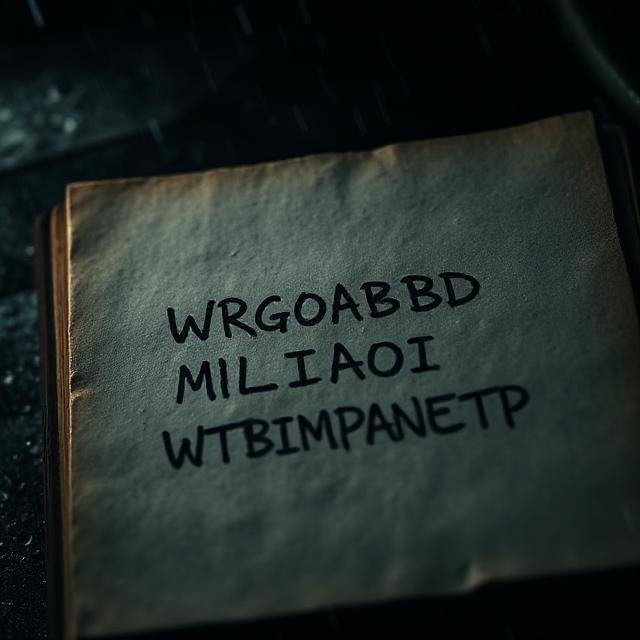
On the back cover of the discovered book, investigators found what appeared to be a coded message. Five lines of seemingly random letters were scrawled in pencil:
WRGOABABD

MLIAOI

WTBIMPANETP

MLIABOAIAQC

ITTMTSAMSTGAB
Below this code was a phone number that led police to a nurse named Jessica Thomson (born Jessie Harkness), who lived just 400 meters from where the body was found.
The Woman Who Knew Too Much
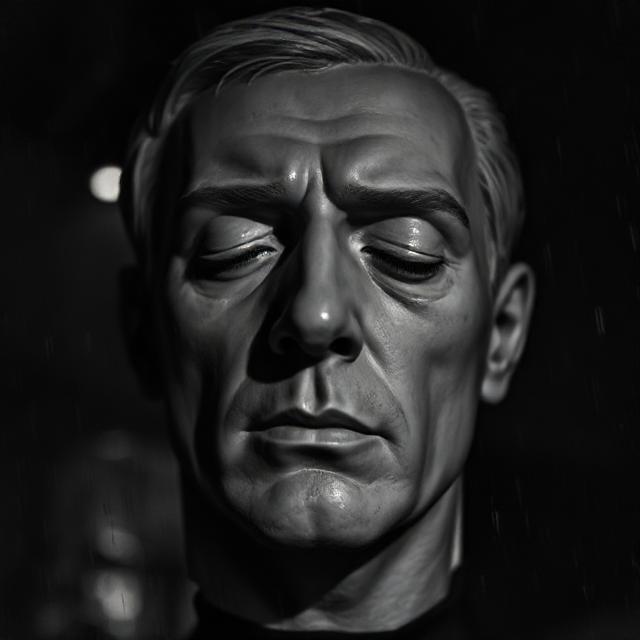
When detectives showed Thomson the plaster cast of the dead man’s face, witnesses reported she looked shocked and seemed about to faint. However, she insisted she’d never seen him before.
Thomson admitted she’d once owned a copy of The Rubáiyát but claimed she’d given it to an army officer named Alfred Boxall during World War II. When investigators tracked down Boxall, he was alive and still possessed the book Thomson had given him.
Thomson’s behavior remained suspicious throughout the investigation. She refused to elaborate on her reaction to seeing the body and seemed evasive when questioned. Some investigators believed she knew the deceased’s identity but chose to remain silent. Similar to the chilling secrets kept in the Black Dahlia case, the Somerton Man’s true identity seemed protected by those who knew the truth.
Decoding Attempts
The mysterious code has never been definitively cracked. Over 75 years, cryptographers, military intelligence analysts, and amateur sleuths have attempted to decipher it. Theories include:
- Book cipher – Each letter represents a word from a specific text
- Initial letters – The first letter of words in a message
- Simple substitution cipher – Letters represent other letters
- Nonsense – Random letters with no meaning
Some researchers believe the irregular spacing and strikethroughs suggest corrections or multiple layers of encryption. Others point to the possibility it’s not a code at all, but rather abbreviations or a personal shorthand.
Theories: Who Was the Somerton Man?
The lack of concrete evidence has spawned countless theories about the somerton man mystery. Each hypothesis presents compelling arguments, yet none can be definitively proven.
The Spy Theory
Many investigators believe the Somerton Man was an intelligence operative killed during Cold War tensions. Supporting evidence includes:
- Sophisticated poisoning method suggesting access to rare toxins
- Removed clothing labels – Standard espionage practice
- Cryptic code resembling wartime ciphers
- Modified tools (screwdriver knife, sharpened scissors)
- Proximity to Woomera – A top-secret rocket testing range
The year 1948 placed this case at the beginning of the Cold War. Australia’s strategic location made it valuable for both Western and Soviet intelligence operations. According to historical records, the Woomera Prohibited Area was being developed as a weapons testing site, making the region a hotbed for espionage.
The Forbidden Love Theory
Some believe the case involves a tragic romance. Jessica Thomson’s suspicious behavior, the romantic poetry connection, and the proximity of her home to the death scene suggest a personal connection.
Perhaps the Somerton Man was a former lover or stalker. The phrase “Tamám Shud” (“ended” or “finished”) could symbolize the end of a relationship—or a life. This theory gained traction when researchers discovered Thomson had a son born in 1947 with physical features remarkably similar to the deceased.
The Poisoning Theory
Evidence strongly suggests intentional poisoning, whether self-inflicted or administered by another. The symptoms—vomiting, pupil constriction, rapid death—align with specific toxins:
- Digitalis – Derived from foxglove plants
- Strychnine – Though testing ruled this out
- Experimental poisons – Military-grade toxins
- Barbiturates – Combined with other substances
The absence of detectable poison in 1948 doesn’t mean no poison existed. Modern forensic science has identified numerous substances that would have been undetectable with 1940s technology.
The Suicide Theory
Perhaps the simplest explanation is suicide. A man, distraught over personal circumstances, removed his identification, consumed poison, and walked to the beach to die. The “Tamám Shud” paper could represent his final statement: “It is finished.”
However, this theory struggles to explain the suitcase, the code, Jessica Thomson’s reaction, and the elaborate efforts to prevent identification.
Modern Forensic Breakthroughs
For decades, the somerton man mystery seemed destined to remain unsolved. Then came advances in DNA technology and genetic genealogy.
The 2022 Identification
In July 2022, Professor Derek Abbott from the University of Adelaide announced a breakthrough identification. Using DNA extracted from the man’s hair and advanced genetic genealogy techniques similar to those used in solving other decades-old cold cases, researchers concluded the Somerton Man was Charles “Carl” Webb, an electrical engineer and instrument maker born in Melbourne in 1905.
Webb had been married to Dorothy “Doff” Robertson, but the couple separated and Webb seemingly disappeared from official records. His profession as an electrical engineer lends some credence to spy theories—such skills were valuable to intelligence agencies.
Unanswered Questions Remain
While the 2022 identification provided closure to one aspect of the mystery, critical questions remain:
- How did Webb die? The cause remains undetermined
- What was the code? Still undeciphered after 75 years
- What was his connection to Jessica Thomson? Did they know each other?
- Why remove all identification? What was he hiding?
- Who placed the book in the car? This act occurred near the death scene
Some researchers dispute the Webb identification, arguing the DNA evidence isn’t conclusive enough and that further verification is needed.
The Cultural Impact and Ongoing Fascination
The somerton man mystery has captivated true crime enthusiasts, cryptographers, and mystery lovers for over seven decades. Its combination of unexplained death, cryptic codes, and possible espionage creates the perfect storm of intrigue.
In Popular Culture
The case has inspired:
- Documentary films examining every angle of the investigation
- Books analyzing the code and theories
- Podcast episodes dissecting the evidence
- Academic papers on cryptography and cold case investigation
- Television dramas featuring similar mysterious deaths
The case demonstrates how certain unsolved mysteries transcend their era, becoming timeless puzzles that each generation attempts to solve with new technology and fresh perspectives.
The Enduring Questions
Even with a possible identification, the core mystery remains. If Charles Webb wanted to die anonymously, why leave such elaborate clues? If he was murdered, who wanted him dead and why?
The code continues to frustrate experts. Is it truly a cipher, or simply meaningless scribbles? Does it contain a confession, a last message, or instructions for someone who never received them?
FAQ: The Somerton Man Mystery
Q: Was the Somerton Man mystery ever solved?
A: Partially. In 2022, researchers identified the man as likely being Charles “Carl” Webb, an electrical engineer from Melbourne. However, the cause of death, the meaning of the code, and many other aspects of the case remain unexplained.
Q: What does “Tamám Shud” mean?
A: “Tamám Shud” is Persian for “ended” or “finished.” It’s the final phrase from The Rubáiyát of Omar Khayyám, a collection of Persian poetry. The phrase appeared on a scrap of paper found in the man’s hidden pocket.
Q: Was the Somerton Man a spy?
A: This remains unproven. The circumstantial evidence—removed labels, cryptic code, possible poisoning, and proximity to weapons testing sites—suggests espionage involvement, but no definitive proof exists.
Q: Has anyone cracked the Somerton Man code?
A: No. Despite 75 years of attempts by professional cryptographers and intelligence agencies, the code found in The Rubáiyát has never been definitively deciphered. Multiple theories exist, but none have been verified.
Q: Who was Jessica Thomson?
A: Jessica Thomson (born Jessie Harkness) was a nurse who lived near Somerton Beach. Her phone number was found in the book with the code. When shown the body, she appeared shocked but denied knowing the deceased. Her son bore physical similarities to the Somerton Man, leading to speculation about a romantic connection.
Conclusion: A Mystery That Refuses to Die
The somerton man mystery represents one of true crime’s most enduring enigmas. Even with modern DNA technology potentially identifying Charles Webb as the deceased, the circumstances surrounding his death remain shrouded in darkness. The cryptic code mocks investigators, the cause of death eludes forensic experts, and the truth seems buried with those who might have known it.
Was he a heartbroken lover who ended his life on a beach? A spy silenced by Cold War enemies? A victim of circumstance caught in something far beyond his control? The evidence points in multiple directions, yet conclusively proves nothing.
What makes this case so haunting isn’t just the mystery itself, but the deliberate nature of the obscurity. Someone—whether the victim or his killer—wanted this man’s identity hidden. The removed labels, the cryptic clues, the poison that left no trace—all suggest careful planning.
Perhaps that’s the true terror of the somerton man mystery: the realization that some secrets are meant to stay buried, some codes are designed never to be broken, and some truths die with those who carry them.
What’s your theory about the Somerton Man? Do you believe Charles Webb was murdered or did he take his own life? Could you crack the code? Share your theories in the comments below, and explore more unsolved mysteries on Cryptic Confessions.