
Belle Gunness Serial Killer: The Shocking Truth About America's Deadliest Woman

The charred remains of fourteen bodies lay scattered across the smoldering ruins of a LaPorte, Indiana farmhouse on April 28, 1908. But the most terrifying discovery wasn’t the corpses in the cellar—it was the realization that Belle Gunness, America’s most prolific female serial killer, might have orchestrated her own escape.
For over a decade, this Norwegian immigrant transformed her pastoral farm into a slaughterhouse, luring victims with promises of love and prosperity. The Belle Gunness serial killer case remains one of history’s most disturbing unsolved mysteries, with a body count that may exceed 40 victims. Understanding how she operated reveals the darkest chapter in American criminal history.
The Making of a Monster: Belle's Early Years
From Norway to America: The Birth of Hell's Belle
Brynhild Paulsdatter Størseth was born on November 11, 1859, in the small fishing village of Selbu, Norway. The youngest of eight children, she grew up in crushing poverty that would shape her ruthless pursuit of wealth in America.
At 21, Brynhild immigrated to Chicago in 1881, anglicizing her name to Belle. She worked as a domestic servant for wealthy families, observing their luxuries while scrubbing their floors. This stark contrast between servant and master would fuel a dangerous obsession with financial security that created the Belle Gunness serial killer.
The transformation from Brynhild to Belle marked more than a name change. It signaled the birth of a predator who understood that in Victorian America, a woman’s greatest weapon wasn’t strength—it was the assumption of her weakness.
The Chicago Years: First Taste of Blood
Belle married Mads Sorenson in 1884, opening a confectionery store in Chicago. The business failed within a year, but mysteriously burned down just as their insurance policy became active. This suspicious fire would become Belle’s signature move.
The couple’s adopted daughter Caroline died in 1896 of “acute colitis”—symptoms remarkably similar to poisoning. Two years later, Mads Sorenson died on July 30, 1900, coincidentally the only day two life insurance policies overlapped. The doctor attributed his death to heart failure, though family members noted his symptoms matched strychnine poisoning.
Belle collected $8,500 in insurance money—equivalent to $300,000 today. The future Belle Gunness serial killer had discovered her lethal business model.
The Murder Farm Operation Begins
Setting the Perfect Trap in La Porte
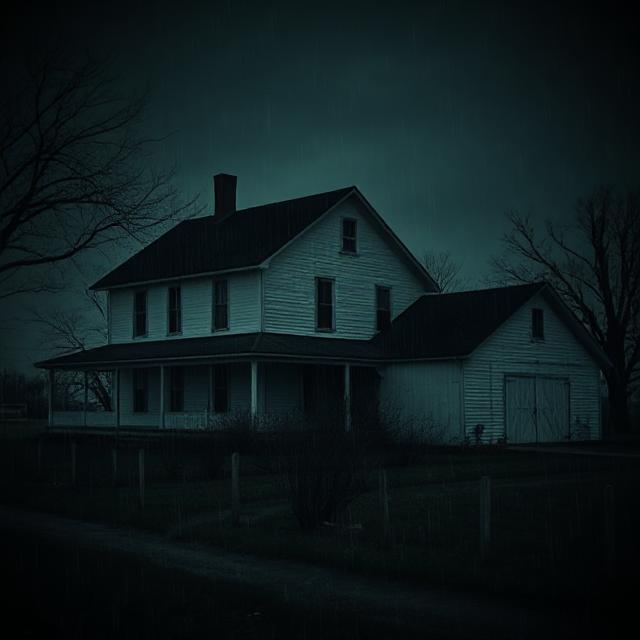
With her insurance windfall, Belle purchased a 42-acre farm on McClung Road in La Porte, Indiana, in November 1901. The isolated property, surrounded by thick woods and situated far from prying neighbors, provided the perfect killing ground for what would become the Belle Gunness serial killer operation.
Belle married Peter Gunness, a Norwegian widower with two daughters, in April 1902. Eight months later, Peter died in a “freak accident” when a meat grinder allegedly fell from a shelf, crushing his skull. The coroner found the death suspicious—the meat grinder would have needed to strike with impossible force—but Belle’s tears convinced authorities of her innocence.
She collected another insurance payout and began her most audacious scheme yet. The Belle Gunness serial killer was ready to industrialize murder.
The Matrimonial Murder Scheme
Belle revolutionized serial killing through newspaper personal ads. Her advertisements in Norwegian-language newspapers across the Midwest read like romance novel promises:
“Personal—comely widow who owns a large farm in one of the finest districts in La Porte County, Indiana, desires to make the acquaintance of a gentleman equally well provided, with view of joining fortunes. No replies by letter considered unless sender is willing to follow answer with personal visit.”
The ads specifically targeted Norwegian immigrants who carried their life savings in cash, distrusted banks, and rarely had close American relatives who might investigate their disappearance. The Belle Gunness serial killer understood her victims’ vulnerabilities perfectly.
How Many People Did Belle Gunness Kill? The Victim Count Debate
Confirmed Victims of the Murder Farm
The official victim count varies wildly, with investigators confirming at least 14 bodies found on the property. However, former farmhand Joe Maxson testified that Belle had him dig numerous holes around the property, suggesting many more victims of the Belle Gunness serial killer remain undiscovered.
Known victims include:
- John Moe (Minnesota) – Disappeared December 1906 with $1,000
- Ole Budsberg (Wisconsin) – Last seen April 1907 with $2,000
- Andrew Helgelien (South Dakota) – Vanished January 1908 with $2,900
- Jennie Olsen – Belle’s adopted daughter, allegedly sent to “finishing school” in 1906
- Peter Gunness – Second husband, died December 1902
- Mads Sorenson – First husband, died July 1900
Ray Lamphere, Belle’s accomplice and lover, claimed she murdered 42 people. He insisted the Belle Gunness serial killer killed most victims by chloroforming them in their sleep, then dismembered the bodies in the basement.
The Missing Men and Their Fortunes
Between 1905 and 1908, dozens of Norwegian men arrived at La Porte train station asking for directions to the Gunness farm. Locals remembered them because they often carried heavy trunks and seemed eager to meet their “bride.”
None returned to the station.
Andrew Helgelien’s brother Asle became suspicious when Andrew’s letters suddenly stopped. More disturbing, Belle continued writing to Asle, claiming Andrew had gone to Norway but asking about his finances. This greed-driven mistake would ultimately expose the crimes of the Belle Gunness serial killer.
Inside the Murder Farm: Belle's Killing Methods
A Victorian House of Horrors
Belle operated with chilling efficiency. Victims arrived expecting romance but found death. Her standard procedure followed a horrifying pattern that investigators slowly pieced together.
She would serve her victims a heavy meal laced with strychnine or chloroform-soaked wine. Once unconscious, the Belle Gunness serial killer would strike them with a cleaver or hammer. The bodies were then dragged to the basement for dismemberment.
Some victims were likely buried alive. Investigators found bodies with dirt in their lungs, suggesting they were unconscious but breathing when buried. The basement contained vats of lye for dissolving flesh and quicklime pits for disposing of bones.
The Children as Accomplices?
Most disturbing was the role of Belle’s children. Neighbors reported seeing the children helping their mother dig holes at night. Belle’s daughter Myrtle, only 11 at the time of the fire, likely knew about the murders but was too terrified to speak.
The psychological impact on these children remains one of the darkest aspects of the Belle Gunness serial killer case. They lived surrounded by death, forced to maintain the facade of a normal family while bodies decomposed beneath their feet.
The Fire of 1908: Did Belle Gunness Escape?
The Night Everything Burned
On April 28, 1908, the Gunness farmhouse erupted in flames at 4 AM. Joe Maxson, the hired hand sleeping in the separate quarters, claimed he woke to smoke and tried unsuccessfully to save the family.
In the basement ruins, investigators found four bodies: three children and a headless woman. The woman’s body was significantly smaller than Belle’s robust 200-pound frame, and the missing head prevented dental identification.
Most suspicious was the discovery of Belle’s dental bridge near the bodies—placed so carefully it seemed staged. Had the Belle Gunness serial killer murdered another woman, removed her own dental work as false evidence, and escaped in the chaos?
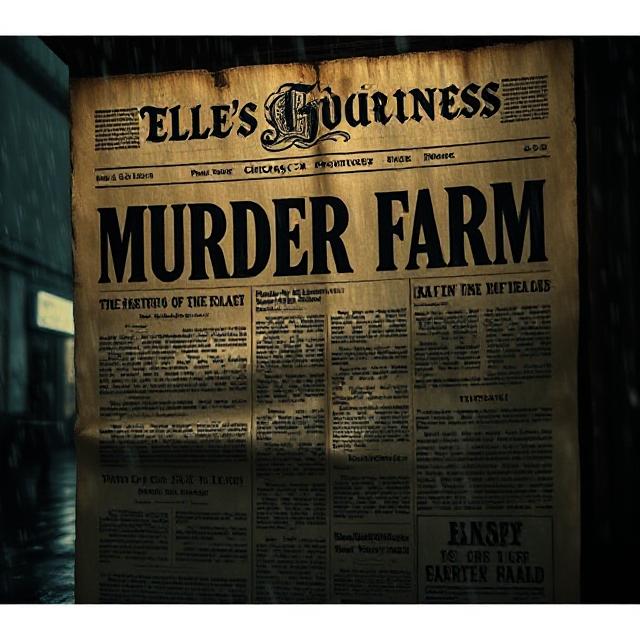
The Ray Lamphere Trial and Confession
Ray Lamphere, Belle’s jealous handyman and former lover, was arrested for arson and murder. During his trial, a parade of witnesses testified about Belle’s suspicious activities and the missing men who visited her farm.
Though acquitted of murder, Lamphere was convicted of arson. On his deathbed in prison, he made a shocking confession: Belle had faked her death. He claimed the Belle Gunness serial killer murdered an unknown woman, placed her in the basement with the children she’d killed with chloroform, and set the fire herself.
According to Lamphere, he helped Belle escape and knew she fled with over $30,000 in cash—worth over $1 million today.
What Happened to Belle Gunness? The Escape Theories
The Esther Carlson Connection
In 1931, a woman named Esther Carlson died in Los Angeles while awaiting trial for poisoning August Lindstrom for his money. Two La Porte residents who viewed her body swore it was the Belle Gunness serial killer.
Carlson was the right age, spoke with a Norwegian accent, and had mysteriously appeared in California around 1908. She also used poison to kill for profit—Belle’s signature method. Authorities planned to exhume Carlson’s body for comparison but never followed through.
Modern DNA Analysis Attempts
In 2007, La Porte forensic investigator Andrea Simmons attempted to extract DNA from the envelope seals on letters Belle had sent. The goal was to compare this DNA with tissue samples from the headless corpse to determine if it was really the Belle Gunness serial killer.
The DNA was too degraded for conclusive results, leaving the mystery unsolved. The headless woman in the basement remains unidentified, and Belle Gunness’s fate stays shrouded in speculation.
Sightings Across America
For decades after 1908, Belle Gunness sightings flooded in from across the country. She was reportedly seen in Chicago, New York, Mississippi, and throughout the Midwest.
One compelling report came from a former neighbor who claimed she saw Belle at a Chicago train station in 1909. The woman fled when recognized, disappearing into the crowd before police could confirm it was the Belle Gunness serial killer.
The Psychology of America's Female Serial Killer Pioneer
Breaking the Mold of Female Killers
Belle Gunness challenged every assumption about female killers. While most women who kill use poison and target family members, Belle employed multiple methods and killed strangers for profit.
Criminal psychologists classify her as a “Black Widow” killer—someone who murders intimate partners for material gain. But the Belle Gunness serial killer evolved beyond this category, industrializing murder in ways that wouldn’t be seen again until the male serial killers of the 1970s.
Her ability to compartmentalize was extraordinary. She attended church, participated in community events, and maintained a reputation as a hardworking widow while simultaneously dismembering bodies in her basement.
Weaponizing Victorian Gender Expectations
Belle’s greatest advantage was society’s inability to imagine a woman as a serial killer. Victorian culture viewed women as gentle, maternal figures incapable of violence.
She exploited these assumptions brilliantly. When Peter Gunness died, Belle’s tears instantly dismissed suspicion. When men disappeared from her farm, authorities assumed they’d simply moved on. No one suspected the grieving widow with her small children could be the Belle Gunness serial killer.
This gender bias allowed Belle to operate openly for years. Even when brothers and friends inquired about missing men, police dismissed concerns because a woman—especially a mother—couldn’t possibly be dangerous.
The Murder Farm's Gruesome Discovery
Excavating the Killing Fields
After the fire, investigators began the horrifying task of excavating Belle’s property. What they found shocked even seasoned lawmen who thought they’d seen everything.
Bodies were buried throughout the property in various stages of decomposition. Some were dismembered and wrapped in oilcloth, others were covered in quicklime to speed decay. The remains of at least 11 additional victims were found in the first week alone.
Most disturbing were the children’s bodies found in the hog pen. Investigators believed these might have been Belle’s own children from previous relationships, killed when they became inconvenient or knew too much about the Belle Gunness serial killer operation.
The Basement Slaughterhouse
The basement revealed Belle’s killing infrastructure. Investigators found multiple cleavers, saws, and medical instruments. Vats contained lye solution with floating tissue remains. The floor showed deep stains where blood had pooled repeatedly.
A secret room behind the basement stairs contained bloody women’s clothing in various sizes—possibly belonging to female victims whose bodies were never found. This suggested the Belle Gunness serial killer’s victim count might include women who answered ads for domestic work.
Belle Gunness in Popular Culture and Legacy
The Birth of Murder Tourism
La Porte became America’s first “murder tourism” destination after Belle’s crimes. Within days of the fire, thousands of curiosity seekers descended on the farm. Enterprising locals sold souvenirs—supposedly Belle’s possessions—to eager tourists.
The farm itself became a macabre attraction. People paid to tour the basement where bodies were dismembered and took photos at the sites where victims were buried. This ghoulish fascination with the Belle Gunness serial killer continued until the property was finally demolished in the 1920s.
Inspiring Modern True Crime Media
Belle Gunness has inspired countless books, films, and documentaries. Her story appears in podcasts like “The Casual Criminalist” and “Female Criminals.” The 2024 Norwegian novel “The Butcher Widow” reimagines her story from a feminist perspective.
The Belle Gunness serial killer case established templates still used in true crime storytelling: the black widow archetype, the murder farm setting, and the “did they escape?” mystery that keeps audiences speculating over a century later.
The La Porte Museum Exhibition
Today, the La Porte County Historical Society Museum maintains a permanent Belle Gunness exhibit. It features artifacts from the farm, victim photographs, and original newspaper coverage. The museum reports it’s their most popular attraction, drawing true crime enthusiasts from around the world.
Local historians conduct “Murder Walk” tours through La Porte, visiting sites connected to Belle’s crimes. These tours book months in advance, particularly around Halloween when interest in the Belle Gunness serial killer peaks.
The Victims’ Forgotten Stories
Andrew Helgelien: The Victim Who Exposed It All
Andrew Helgelien, a Norwegian farmer from Aberdeen, South Dakota, became Belle’s final known victim and the key to her undoing. He arrived in January 1908 with $2,900—his entire life savings intended to start their new life together.
His brother Asle’s persistent investigation exposed the crimes. When Belle claimed Andrew had left for Norway but kept asking about his money, Asle grew suspicious. His arrival in La Porte just days after the fire led to the discovery of Andrew’s body and the unraveling of the Belle Gunness serial killer’s murder enterprise.
Jennie Olsen: The Adopted Daughter Who Knew Too Much
Perhaps the most tragic victim was Jennie Olsen, Belle’s 14-year-old adopted daughter. In 1906, Belle told neighbors Jennie had been sent to a Lutheran college in Los Angeles.
In reality, Jennie’s body was found buried in the hog pen. The Belle Gunness serial killer likely killed her because the girl had witnessed murders or threatened to expose the truth. Jennie’s death shows Belle would eliminate anyone—even children she’d raised—to protect her secret.
The Unknown Woman in the Basement
The headless woman found in the basement remains unidentified. She was approximately 5’3″ and 150 pounds—significantly smaller than Belle’s 5’7″, 200-pound frame.
Some theorize she was a homeless woman Belle hired as a housekeeper, killed specifically to fake her own death. Others believe she might have been another victim who answered Belle’s ads, killed just before the fire. Her identity remains one of the enduring mysteries in the Belle Gunness serial killer case.
Modern Forensic Analysis: What We Know Now
Contemporary Criminal Profiling
Modern forensic psychologists studying Belle Gunness have identified patterns missed by 1908 investigators. Her victim selection showed sophisticated understanding of vulnerable populations—immigrants with money but no American support systems.
She likely suffered from antisocial personality disorder combined with narcissistic traits. Her ability to mimic emotion while feeling none, her lack of remorse, and her viewing people as objects to exploit all fit contemporary definitions of psychopathy displayed by the Belle Gunness serial killer.
The Insurance Fraud Pattern
Financial forensics experts note Belle pioneered insurance fraud methods later used by other killers. She understood policy overlaps, waiting periods, and how to stage “accidents” that would pass cursory investigation.
Her first husband’s death on the exact day two policies overlapped wasn’t coincidental—it showed careful planning and deep understanding of insurance contracts. This financial sophistication was unusual for women of her era and social class.
Why Belle Gunness Still Terrifies Us
The Suburban Monster Template
The Belle Gunness serial killer created the template for a particularly American nightmare: the killer hiding in plain sight in rural America. She proved that evil doesn’t always lurk in dark alleys—sometimes it bakes pies and tends gardens.
This fear resonates today because it undermines our basic assumptions about safety. If a widowed mother running a farm could be America’s most prolific serial killer, how can we trust anyone?
The Ultimate Escape Artist
The possibility that Belle escaped justice makes her story uniquely unsettling. Unlike most serial killers who are caught or killed, the Belle Gunness serial killer may have won. She possibly murdered dozens, stole fortunes, and lived freely under another identity.
This open ending denies us closure. Over a century later, we’re still asking: What happened to Belle Gunness? That unanswered question ensures her story remains alive, terrifying new generations who discover the woman who turned a farmhouse into a slaughterhouse.
Frequently Asked Questions About Belle Gunness
Q: How many people did the Belle Gunness serial killer actually murder?
A: The confirmed count is 14 bodies found on her property, but investigators believe the true number ranges from 25 to 40 victims. Ray Lamphere, Belle’s accomplice, claimed she killed 42 people. Many victims likely remain undiscovered on the vast farm property.
Q: Did the Belle Gunness serial killer really escape the fire?
A: Evidence strongly suggests she escaped. The headless woman found was 50 pounds lighter and 4 inches shorter than Belle. Her dental bridge was conveniently placed near the bodies, and she had withdrawn large sums of money before the fire. Ray Lamphere confessed on his deathbed that he helped the Belle Gunness serial killer escape.
Q: Was Belle Gunness ever officially caught?
A: No, the Belle Gunness serial killer was never officially caught or confirmed dead. The case remains open, technically making her a fugitive for over 115 years. The woman many believe was Belle—Esther Carlson—died in 1931 before she could be positively identified.
Q: Where is the Belle Gunness serial killer buried?
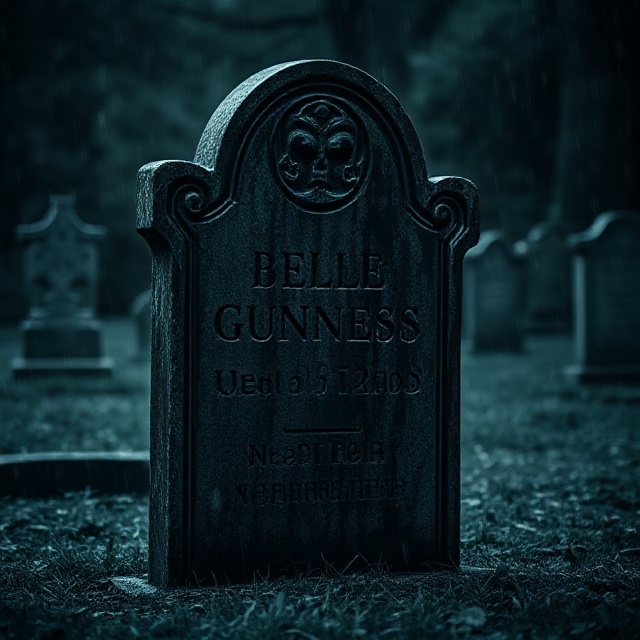
A: A grave marked “Belle Gunness” exists at Forest Home Cemetery in Forest Park, Illinois. However, investigators believe the headless woman buried there is one of Belle’s victims, not Belle herself. The actual Belle Gunness serial killer likely was never buried under her own name.
Q: Why did Belle Gunness target Norwegian immigrants?
A: The Belle Gunness serial killer specifically targeted Norwegian immigrants because they often carried their life savings in cash, distrusted American banks, and had few relatives in America who might investigate their disappearance. She advertised in Norwegian-language newspapers and used her shared heritage to build trust.
Q: Can you visit the Belle Gunness murder farm today?
A: The original farmhouse and buildings were destroyed in the 1908 fire and later demolished. The property is now privately owned farmland. However, the La Porte County Historical Society Museum has an extensive Belle Gunness exhibit, and the city offers historical tours of locations connected to the Belle Gunness serial killer case.
The Enduring Mystery of America's First Female Serial Killer
Belle Gunness transformed the American heartland into a killing field, proving that evil can wear any face and strike anywhere. Her story forces us to confront uncomfortable truths about trust, gender assumptions, and the human capacity for deception.
Over a century later, the Belle Gunness serial killer case continues to fascinate and horrify. Every new documentary, book, or podcast brings fresh speculation about her fate. Did she die in the fire she set? Or did America’s most prolific female serial killer successfully escape justice, living comfortably on blood money while her victims lay rotting in unmarked graves?
The answer may be buried somewhere in an unopened archive, a dusty courthouse record, or perhaps in an unmarked grave in Los Angeles. Until then, the Belle Gunness serial killer remains what she always was—a shadow figure who proved that the most dangerous monsters are the ones we invite through our front door.
What’s your theory about the Belle Gunness serial killer’s fate? Did she die in the 1908 fire, or did America’s most prolific female serial killer successfully escape justice? Share your thoughts and theories in the comments below, and don’t forget to explore our other chilling true crime stories from America’s dark past.
To learn more about the Belle Gunness serial killer case, visit the La Porte County Historical Society Museum or explore the comprehensive records at Wikipedia’s Belle Gunness article. Or for more female serial killers check this blog out