
Monster with 21 Faces: Terrifying Mystery Japan Never Solved

In the shadowy realm of unsolved mysteries, few cases have captured public imagination like Japan’s Monster with 21 Faces. For 17 terrifying months between 1984 and 1985, this faceless criminal group terrorized an entire nation, poisoning children’s candy and taunting police with cryptic letters that revealed shocking intelligence about law enforcement operations.
What makes the Monster with 21 Faces case particularly chilling isn’t just the elaborate criminal enterprise it’s the fact that despite mobilizing over one million police officers and investigating 125,000 suspects, the Monster with 21 Faces vanished without a trace, taking their secrets to the grave.
The Nightmare Begins: A CEO Kidnapped from His Bath
The horror story began on March 18, 1984, when two masked gunmen shattered the peaceful evening routine of Katsuhisa Ezaki, president of the Glico confectionery company. Armed with a pistol and rifle, the intruders forcefully entered Ezaki’s Nishinomiya home around 9:00 PM while he was taking his evening bath.
The kidnappers displayed meticulous planning that would become their signature. Before finding Ezaki, they had tied up his mother, wife, and eldest daughter. When Ezaki’s wife offered them money, the criminals coldly replied, “Be quiet. Money is irrelevant” a statement that would prove prophetic.
Their ransom demand was staggering: one billion yen (approximately $4.3 million) and 220 pounds of gold bullion. This represented the largest ransom ever demanded in Japan, a country where only 27 kidnappings had been reported the previous year.
But the Monster with 21 Faces had bigger plans than simple extortion. Three days later, Ezaki made a dramatic escape, breaking free from his restraints and kicking down a warehouse door in Ibaraki, Osaka. He flagged down railway employees who helped him contact police and family but his freedom marked the beginning of something far more sinister.
The Monster with 21 Faces investigation would soon reveal this was no ordinary kidnapping case. The criminals had carefully studied their target and possessed disturbing knowledge of corporate operations that suggested an inside connection or extensive surveillance capabilities.
The Birth of a Literary Monster
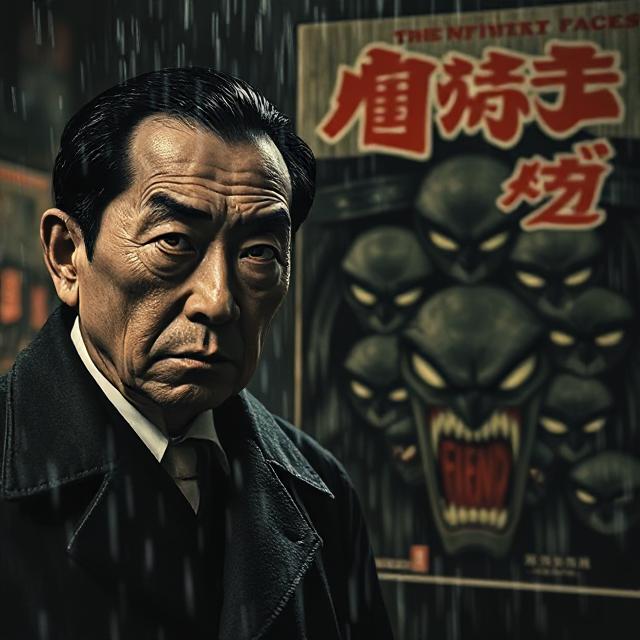
The criminal group’s name drew inspiration from Edogawa Rampo’s 1936 children’s detective story “The Fiend with Twenty Faces,” featuring a master thief and disguise artist who served as archenemy to detective Kogoro Akechi. By adding one additional face, the real-world Monster with 21 Faces seemed to mock both literature and law enforcement.
Rampo based his fictional villain on Arsène Lupin, the gentleman thief, originally intending to name him “The Phantom Thief with Twenty Faces”. The Monster with 21 Faces would prove far more dangerous than any fictional creation, turning children’s literature into a blueprint for psychological warfare.
The literary connection wasn’t coincidental. The criminals demonstrated sophisticated knowledge of Japanese culture, police procedures, and media manipulation that suggested educated, methodical minds behind the chaos.
Psychological Warfare: Letters That Shocked a Nation
What transformed this from a simple kidnapping into a national nightmare were the Monster with 21 Faces letters. The group didn’t just communicate they psychologically tortured their victims and law enforcement with messages that revealed disturbing insight into police operations.
The Monster with 21 Faces first major threat came on May 10, 1984, claiming they had “laced $21 million worth of the company’s confections with potassium cyanide soda”. The letter to Glico was followed by a chilling message to police that demonstrated their intelligence-gathering capabilities:
“To Japanese police fools: Are you stupid? There’s so many of you, what on earth are you doing? If you are real pros try catching me. There’s too much handicap so I will give you a hint. There’s no fellows in the Ezaki’s relatives, there’s no fellows in Nishinomiya police, there’s no fellows in Flood fighting corps. Car I used is gray, food was bought at Daiei.”
The specificity was terrifying. How did they know internal police theories? Why were they providing clues that seemed designed to humiliate rather than help? The psychological profile emerging was of criminals who enjoyed the game more than the money.
The Poisoned Candy Terror Campaign
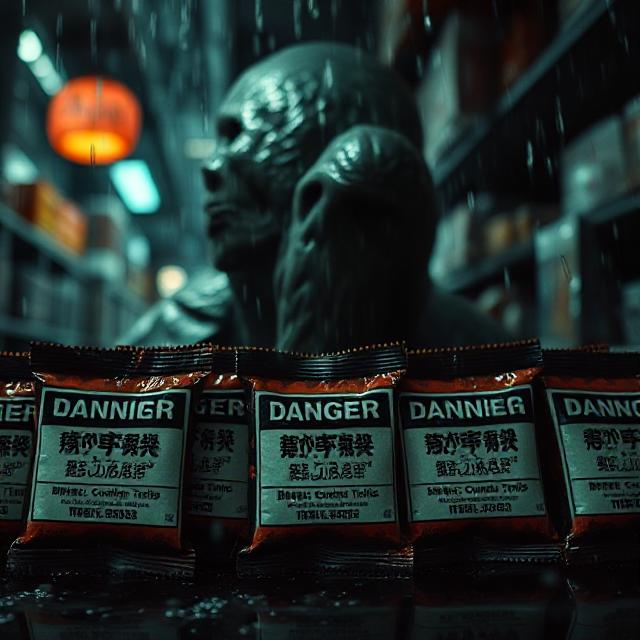
The Monster with 21 Faces escalated from threats to action with methodical precision. After Glico pulled products worth over $20 million from shelves and laid off 450 part-time workers, the Monster with 21 Faces seemed satisfied and issued a bizarre “forgiveness” message on June 26: “We Forgive Glico!”
But the Monster with 21 Faces forgiveness came with a price they simply shifted targets. In October 1984, they sent a letter to “Moms of the Nation” claiming 20 packages of Morinaga candy had been laced with deadly sodium cyanide. This wasn’t an empty threat from the Monster with 21 Faces.
Police searched stores from Tokyo to western Japan and found over a dozen lethal packages of Morinaga Choco Balls and Angel Pie before anyone was poisoned. These packages had labels reading “Danger: Contains Toxins”.
The warning labels revealed the group’s twisted psychology they wanted terror, not mass casualties. More tampered confections were found in February 1985 for a total of 21 lethal sweet products. The number wasn’t random; it matched the Monster with 21 Faces name, suggesting obsessive attention to symbolic detail.
The Monster with 21 Faces poisoning campaign demonstrated sophisticated understanding of supply chain vulnerabilities and media manipulation that went far beyond typical criminal enterprises.
The Fox-Eyed Man: A Face in the Shadows
The investigation’s most tantalizing breakthrough came through surveillance footage and witness descriptions of a mysterious figure police dubbed “the Fox-Eyed Man.” On June 28, 1984, during a ransom drop operation, an undercover investigator spotted “a large, well-built man wearing sunglasses, his hair cut short and permed, with ‘eyes like those of a fox'”.
This suspect appeared again months later. On November 14, 1984, during a House Food extortion attempt, agents located the fox-eyed man wearing a golf cap and glasses, standing at a phone booth in Shiga prefecture. When he noticed police attention, he simply walked away.
Despite one officer being confident this was their target and attempting to photograph him, headquarters ordered agents not to pursue—a decision that haunted the investigation. The Fox-Eyed Man became a phantom, appearing at crucial moments but always slipping away.
A Police Chief's Ultimate Sacrifice
The Vanishing Act: How Monsters Disappear
After August 12, 1985, the Monster with 21 Faces simply ceased to exist. The statute of limitation for Ezaki’s kidnapping expired in June 1995, and for the attempted poisonings in February 2000. Even if the Monster with 21 Faces confessed today, they couldn’t be prosecuted.
The Monster with 21 Faces investigation’s scope was staggering. At one point, it was estimated that over a million police officers had worked on the case, chasing down more than 28,000 tips and investigating nearly 125,000 persons-of-interest. Despite this massive effort targeting the Monster with 21 Faces, no suspect was ever charged.
The case was officially closed on February 13, 2000, when National Police Agency official Yuji Aiura admitted “defeat” at the hands of this mysterious cabal. NPA Chief Setsuo Tanaka stated: “It is extremely regrettable that we could not apprehend suspects.”
Theories and Shadows: Who Were the Monsters?
The complete lack of resolution has spawned countless theories about the Monster with 21 Faces’ true identity and motives. Fruitless interviews of around 125,000 suspects generated theories ranging from yakuza to disgruntled Glico employees, from stock manipulators to North Korean secret agents.
Police named only one suspect publicly: Manabu Miyazaki, son of a Yakuza boss who had a feud with Glico and matched descriptions of both the Fox-Eyed Man and the man caught on surveillance footage. However, Miyazaki had an airtight alibi for encounters with the Monster, as he was in business meetings during crucial timeframes.
Some investigators theorized the group included multiple generations, possibly explaining the phone calls featuring both a woman and a child. Critics described their actions as “geki jo hansei” or “crime as theater,” noting the seemingly random details provided in letters that never led to breakthroughs.
The Perfect Crime: Why They Were Never Caught
The Monster with 21 Faces succeeded where other criminals failed by understanding that the real target wasn’t money—it was the system itself. At almost every turn, the Monster with 21 Faces operatives were not there to collect ransom, leading police to believe there might have been an ulterior motive, perhaps even political.
The Monster with 21 Faces operational security was flawless. Almost all evidence left behind at crime scenes was either stolen or mass-produced, making tracking the Monster with 21 Faces impossible. When they provided clues, these seemed designed to showcase intelligence rather than assist capture.
The timing of their withdrawal also suggests strategic thinking. Yamamoto’s suicide had turned public opinion against them, transforming them from folk heroes challenging corporate Japan into villains responsible for a good man’s death. They recognized this shift and disappeared before it could threaten their safety.
Cultural Impact: The Monster's Dark Legacy
The Monster with 21 Faces case fundamentally changed Japanese society’s relationship with crime and security. An expert on Police Matters, Takuro Suzuki, observed that the Monster with 21 Faces represented “a new type of crime for Japan” and that “police are using old-style investigation techniques, so they’re always behind”.
The Monster with 21 Faces case exposed vulnerabilities in Japan’s food supply chain and law enforcement coordination. Multiple copycat criminal gangs proceeded with less sophisticated extortion attempts against food companies for years, though police solved almost all these cases.
The literary connection ensured the Monster with 21 Faces case’s place in Japanese culture. The criminals’ inspiration from Edogawa Rampo has been referenced in numerous manga, anime, and films, including CLAMP’s “Man of Many Faces” and the anime “Daughter of Twenty Faces”.
The Monster with 21 Faces legacy continues to influence Japanese crime fiction and true crime discussions, cementing their status as the country’s most notorious unsolved mystery.
Modern Mysteries: Could It Happen Today?
Q: Could the Monster with 21 Faces commit similar crimes in modern Japan?
A: Today’s advanced surveillance technology, DNA analysis, and digital forensics would make the Monster with 21 Faces methods nearly impossible. However, their psychological warfare tactics and media manipulation demonstrate timeless criminal sophistication that remains relevant to understanding modern terrorism and extortion cases.
Q: Why didn’t anyone ever come forward with information about the Monster with 21 Faces?
A: The Monster with 21 Faces operational security was exceptional, and they may have been a very small, tight-knit organization. Additionally, Yamamoto’s suicide created such negative public sentiment that anyone connected to the Monster with 21 Faces would face not just legal consequences but social ostracism.
Q: What was their real motive if not money?
A: Evidence suggests they sought to expose weaknesses in Japanese corporate and law enforcement systems. Their refusal to collect ransoms and focus on psychological manipulation indicates ideological rather than financial motivation.
The Enduring Question: Where Are They Now?
Today, the Monster with 21 Faces remains Japan’s greatest criminal mystery. If they were in their 20s and 30s during the crimes, they would only be in their 60s and 70s now. They could be grandfathers, retired professionals, or respected community members—ordinary people hiding extraordinary secrets.
The case’s true horror lies not in what happened, but in what remains unknown. In a country known for solving crimes with methodical precision, the Monster with 21 Faces achieved something remarkable: the perfect crime.
Their legacy haunts every unsolved case, every anonymous threat, every moment when criminals seem one step ahead of justice. They proved that with sufficient intelligence, planning, and psychological manipulation, even the most advanced law enforcement can be reduced to chasing shadows.
What do you think happened to the Monster with 21 Faces? Share your theories in the comments below after four decades, this mystery still demands answers.
For more chilling unsolved mysteries and true crime investigations, explore our archives of unexplained disappearances. Follow Cryptic Confessions for weekly deep dives into history’s darkest secrets.
Sources: