
Hinterkaifeck Murders: Germany's Most Chilling Unsolved Mystery
The Hinterkaifeck Murders remain one of Germany’s most perplexing and terrifying unsolved cases. On a cold March night in 1922, six members of the Gruber family were brutally killed at their remote farmstead in Bavaria. Despite extensive investigations spanning decades, the identity of the killer remains unknown, leaving behind a chilling mystery that continues to captivate true crime enthusiasts worldwide.

The Gruber Family: Victims of an Unthinkable Crime
The Hinterkaifeck farm sat isolated in the Bavarian countryside, approximately 70 kilometers north of Munich. The property housed six residents who would all become victims of this shocking crime:
The Victims:
- Andreas Gruber (63) – The family patriarch and farm owner
- Cäzilia Gruber (72) – Andreas’s wife
- Viktoria Gabriel (35) – Andreas’s widowed daughter
- Cäzilia Gabriel (7) – Viktoria’s young daughter
- Josef Gabriel (2) – Viktoria’s toddler son
- Maria Baumgartner (44) – The family’s newly hired maid
Maria Baumgartner had only been working at the farm for a few hours before the murders occurred. The previous maid had quit six months earlier, claiming the farmhouse was haunted and expressing fears about strange occurrences around the property.

Strange Occurrences Before the Massacre
The weeks leading up to the Hinterkaifeck Murders were filled with disturbing events that suggested someone had been watching the family. These ominous signs painted a picture of escalating tension and fear
Unexplained Footprints and Sounds
Andreas Gruber had discovered mysterious footprints in the snow leading from the forest to his farmhouse several days before the murders. The tracks approached the house but showed no corresponding return path, suggesting someone had remained on or near the property.
Family members reported hearing strange footsteps in the attic late at night. Andreas investigated multiple times but found nothing to explain the sounds. The family became increasingly uneasy, with several members expressing fear about the unexplained noises above their heads.
Missing Items and Newspaper Theft
Someone had been stealing newspapers from the farm’s mailbox for months before the crime. Andreas had noticed this pattern but couldn’t identify the culprit. Additionally, a house key went missing, though the family initially attributed this to misplacement rather than theft.
The previous maid’s departure six months earlier now seemed prophetic. She had complained about feeling watched and claimed to hear voices when no one else was present. Her abrupt resignation left the family struggling to find replacement help.
The Night of Horror: March 31, 1922
Investigators later reconstructed the likely sequence of events based on evidence found at the scene:
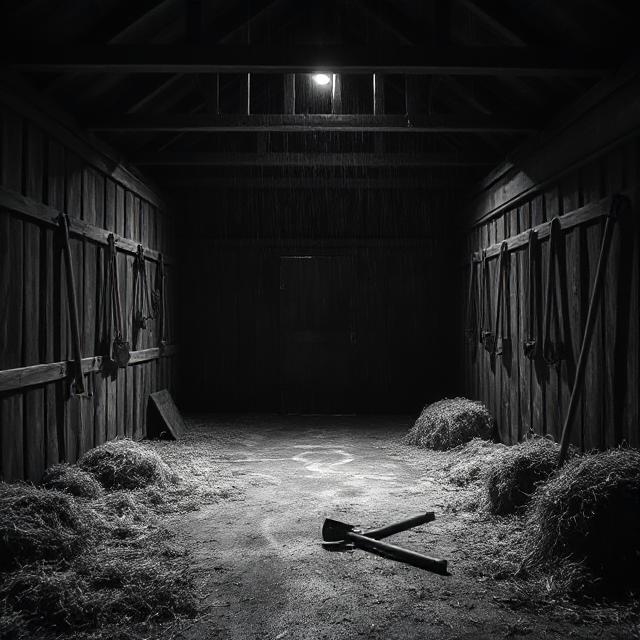
The Barn Murders: Andreas Gruber and his wife Cäzilia were lured to the barn under unknown circumstances. The killer attacked them with a mattock (a farming tool similar to a pickaxe), delivering fatal blows to their heads. Their daughter Viktoria and granddaughter Cäzilia were also killed in the barn, suggesting they either witnessed the initial attack or were called outside by the perpetrator.
Inside the House: Two-year-old Josef and the maid Maria Baumgartner were murdered inside the farmhouse. Little Josef was found in his bed, while Maria’s body was discovered in her sleeping quarters. The killer had used the same mattock for all the murders.
Disturbing Post-Murder Behavior
What makes the Hinterkaifeck Murders particularly chilling is evidence that the killer remained on the property for several days after the massacre. This unprecedented behavior in murder cases adds an extra layer of horror to an already gruesome crime.
The perpetrator had:
- Fed the livestock daily
- Eaten meals in the kitchen
- Lit fires in the fireplace
- Possibly slept in the house
Neighbors later reported seeing smoke rising from the farmhouse chimney during the days following the murders, though they didn’t think to investigate immediately due to the family’s reclusive nature.
The Investigation: Decades of Dead Ends
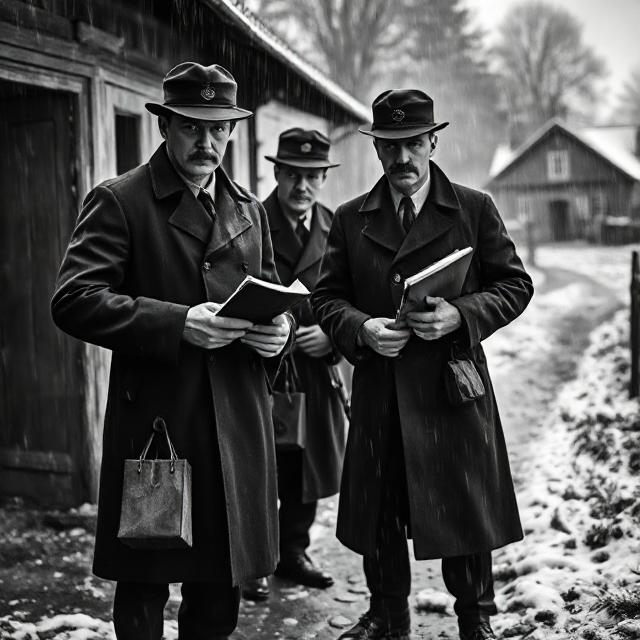
The discovery of the bodies on April 4th launched one of Bavaria’s most extensive murder investigations. Despite the efforts of numerous detectives and the examination of over 100 suspects, the Hinterkaifeck Murders case remained frustratingly unsolved.
Initial Police Response
Local authorities were ill-equipped to handle such a complex crime scene. The remote location and delayed discovery of the bodies complicated evidence collection. By the time investigators arrived, contamination of the crime scene had already occurred.
The police focused their initial investigation on several theories:
- Robbery gone wrong – Though this seemed unlikely given that valuable items remained untouched
- Family dispute – Investigators examined potential conflicts within the Gruber family
- External threat – The possibility of an outsider targeting the isolated family
Key Evidence and Clues
Several pieces of evidence emerged during the investigation, though none led to a definitive solution:
The Murder Weapon: The mattock used in the killings belonged to the Gruber family and was found at the scene. This suggested the killer hadn’t planned to use this specific weapon or had intimate knowledge of tools available on the farm.
Financial Records: Andreas Gruber had been involved in various business dealings and land disputes. Investigators examined whether financial motivations could explain the murders.
Witness Accounts: Neighbors provided conflicting accounts of suspicious individuals seen near the farm in the days leading up to the murders. However, none of these sightings could be corroborated or connected to specific suspects.
Prime Suspects: Theories and Dead Ends
Over the decades, investigators and amateur sleuths have proposed numerous suspects for the Hinterkaifeck Murders. While several individuals attracted significant attention, none could be definitively linked to the crime.
Lorenz Schlittenbauer: The Neighbor Under Suspicion
Lorenz Schlittenbauer, a neighbor and possible father of Viktoria Gabriel’s children, became a primary suspect. His behavior during the discovery of the bodies raised suspicions among investigators.
Suspicious Behavior:
- He was part of the group that discovered the bodies
- Witnesses reported he seemed unusually calm during the discovery
- He had previous relationships with Viktoria Gabriel
- Some claimed he had detailed knowledge of the family’s routines
However, despite intensive investigation, no concrete evidence linked Schlittenbauer to the murders. He maintained his innocence until his death in 1941.
Other Potential Suspects
Karl Gabriel: Viktoria’s deceased husband’s brother attracted suspicion due to potential inheritance disputes and family tensions.
Unknown Drifter: Some investigators believed a transient individual might have targeted the isolated farm for robbery, though the extended stay after the murders made this theory less plausible.
Military Connection: Given the post-World War I period, some theorized that a disturbed veteran might have committed the crimes.
Modern Investigations and Renewed Interest
The Hinterkaifeck Murders case has experienced several revivals as new investigative techniques and renewed public interest have brought fresh perspectives to the century-old mystery.
2007 Police Academy Investigation
In 2007, students and faculty at the Fürstenfeldbruck Police Academy undertook a comprehensive review of the case using modern investigative techniques. They examined:
- Forensic Analysis: Modern forensic methods applied to existing evidence
- Geographic Profiling: Analysis of the crime scene location and suspect movement patterns
- Behavioral Analysis: Psychological profiling of the unknown perpetrator
While this investigation provided new insights into the killer’s likely characteristics and motivations, it didn’t identify a specific suspect.
Digital Age Theories
The internet era has brought new theories and amateur investigations into the Hinterkaifeck Murders. Online communities continue to analyze evidence, propose new suspects, and debate existing theories.
Recent discussions have focused on:
- Family Secret Theories: Speculation about hidden family relationships or secrets
- Economic Motivations: Analysis of Andreas Gruber’s business dealings and potential disputes
- Psychological Profiling: Modern understanding of criminal behavior applied to the case
The Enduring Mystery: Why the Case Remains Unsolved
Several factors have contributed to the Hinterkaifeck Murders remaining unsolved for over 100 years:
Investigation Limitations
Technology Constraints: 1920s forensic science lacked the sophisticated tools available today. DNA analysis, advanced fingerprinting, and other modern techniques weren’t available to the original investigators.
Crime Scene Contamination: The delayed discovery and multiple people entering the crime scene before police arrival compromised potential evidence.
Limited Resources: Rural Bavarian police in 1922 had limited experience with such complex murder investigations.
The Perpetrator’s Advantages
Remote Location: The isolated farm provided the killer with privacy to commit the crimes and remain undetected for days.
Insider Knowledge: The perpetrator’s familiarity with the family’s routines and the property layout suggested either extensive surveillance or personal knowledge.
Post-Crime Behavior: The decision to remain on the property after the murders was unprecedented and may have helped cover tracks or destroy evidence.
Cultural Impact and Legacy
The Hinterkaifeck Murders have left an indelible mark on German true crime culture and continue to fascinate people worldwide. The case has inspired:
- Books and Documentaries: Numerous publications and films have examined the case
- Academic Studies: The murders are studied in criminology courses as an example of an unsolved case
- Tourist Interest: The former site of the Hinterkaifeck farm attracts visitors interested in true crime history
The case represents the intersection of rural German life in the post-World War I era with one of history’s most baffling multiple murders.
Lessons from an Unsolved Case
The Hinterkaifeck Murders demonstrate how even the most extensively investigated cases can remain unsolved. This reality offers several insights:
Evidence Preservation: The importance of proper crime scene management and evidence collection cannot be overstated.
Witness Reliability: The conflicting accounts from neighbors highlight challenges in witness testimony, especially in high-stress situations.
Time Limitations: The passage of time creates additional obstacles for investigators as witnesses die and evidence deteriorates.
Modern Parallels and Comparisons
Contemporary true crime enthusiasts often compare the Hinterkaifeck Murders to other famous unsolved cases. Similar elements appear in cases like:
- The Villisca Axe Murders (1912 Iowa) – Another unsolved family massacre
- The Keddie Cabin Murders (1981 California) – Multiple victims in an isolated location
- The Clutter Family Murders (1959 Kansas) – Though solved, initially shared similar characteristics
These comparisons help criminologists understand patterns in family annihilation cases and the challenges they present to investigators.
For readers interested in similar cases, you might find our analysis of [other unsolved family murders] fascinating, or explore our investigation into [isolated location crimes] that share common elements with the Hinterkaifeck case.
FAQs About the Hinterkaifeck Murders
Q: Were the Hinterkaifeck Murders ever officially solved? A: No, despite extensive investigations spanning decades and over 100 suspects being questioned, the Hinterkaifeck Murders remain officially unsolved.
Q: What was the most disturbing aspect of the crime? A: Many investigators consider the killer’s decision to remain on the property for several days after the murders to be the most chilling aspect of the case.
Q: Has modern forensic science provided any new leads? A: While modern techniques have offered new insights into the crime, they haven’t identified a specific perpetrator due to the age of the case and limited physical evidence.
Q: Why did the previous maid quit before the murders? A: The previous maid left six months before the murders, claiming the farmhouse was haunted and expressing fears about strange occurrences on the property.
The Search for Truth Continues
More than a century after the Hinterkaifeck Murders shocked Bavaria, the case continues to captivate investigators and true crime enthusiasts. The combination of brutal violence, mysterious circumstances, and the killer’s unprecedented post-murder behavior creates a puzzle that seems designed to resist solution.
While modern investigative techniques have shed new light on various aspects of the case, the fundamental question remains unanswered: who killed the Gruber family and Maria Baumgartner on that March night in 1922?
The Hinterkaifeck Murders serve as a reminder that some mysteries may never be solved, regardless of how thoroughly they’re investigated. The case challenges our assumptions about justice and closure while demonstrating the limitations of even the most determined investigative efforts.
As long as people remain fascinated by unsolved mysteries, the Hinterkaifeck Murders will continue to inspire theories, investigations, and discussions. Perhaps someday, new evidence or a breakthrough in forensic science will finally provide answers to this chilling century-old case.
What’s your theory about the Hinterkaifeck Murders? Do you believe the killer was someone known to the family, or was this the work of a stranger? Share your thoughts and join the ongoing discussion about one of history’s most perplexing unsolved cases.