Esther Gonzalez Murder: Shocking DNA Twist After 45 Years
The frigid morning of February 10, 1979, changed everything for the Gonzalez family. What began as a routine missing person report would become one of California’s most haunting cold cases, stretching across nearly five decades before a shocking DNA revelation would finally unmask the killer.

The Disappearance That Shattered a Family
Seventeen-year-old Esther Gonzalez left her parents’ home in Beaumont, California, on February 9, 1979, with a simple plan. She intended to walk the familiar route to her sister’s house in nearby Banning, roughly eight miles away. It was a journey she had made countless times before.
But Esther never arrived at her destination.
When her sister realized Esther hadn’t shown up, panic set in. The family immediately contacted authorities, launching a search that would consume their lives for the next 45 years. What they couldn’t have known was that the answer to their decades of anguish lay with the very person who would “discover” Esther’s body.
A Grisly Discovery on Highway 243
The following morning, February 10, 1979, a man called the Riverside County Sheriff’s Department with devastating news. He had found a young woman’s body in a snowbank off Highway 243, approximately 85 miles east of Los Angeles.
The caller identified himself as Lewis Randy Williamson, a Marine Corps veteran who claimed he was simply passing through the area when he made the horrific discovery.
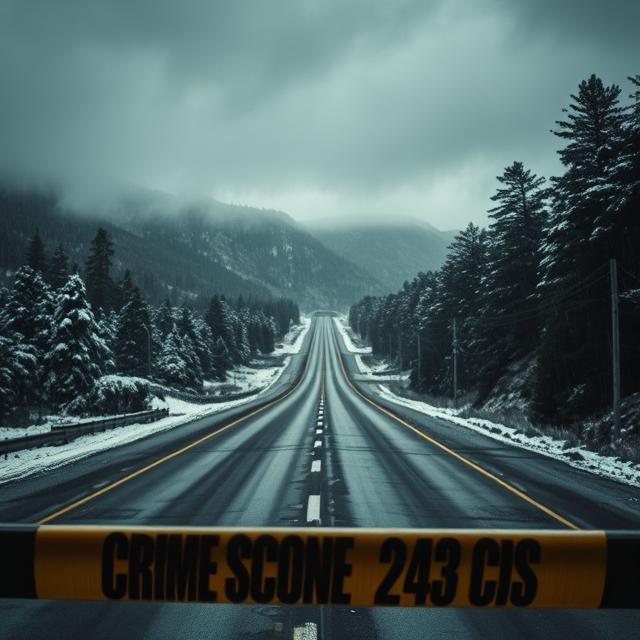
When investigators arrived at the scene, they found Esther’s lifeless body. The brutal nature of the crime was immediately apparent. She had been raped and bludgeoned to death before being discarded like refuse in the snow.
Initial Investigation and a Crucial Mistake
Detectives noted something peculiar about Williamson during their initial interaction. According to reports, he appeared argumentative and agitated when questioned about his discovery. This behavior raised red flags for experienced investigators.
Five days after finding the body, Williamson agreed to sit for a formal interview with law enforcement. During this session, investigators administered a polygraph test, which Williamson reportedly passed. Based on this result, authorities cleared him of any wrongdoing in the Esther Gonzalez murder case.
This decision would prove to be one of the most costly mistakes in California criminal justice history, allowing the Esther Gonzalez murder to remain unsolved for decades.
Decades of Heartbreak and Unanswered Questions
For the Gonzalez family, the years that followed were filled with unbearable uncertainty. They held vigils, reached out to media, and never stopped hoping that someone, somewhere, held the key to solving Esther’s murder.
Elizabeth Gonzalez, Esther’s older sister, became a tireless advocate for justice. She spent decades pushing authorities to keep the case active, refusing to let her sister’s memory fade into obscurity.
Meanwhile, Lewis Randy Williamson continued living what appeared to be a normal life. After his military service, he eventually relocated to Florida, where he would remain until his death in 2014 – taking what everyone believed were his secrets about the Esther Gonzalez murder to the grave.

The Breakthrough: When Science Meets Justice
In recent years, the Riverside County Regional Cold Case Homicide Team began applying cutting-edge investigative genetic genealogy techniques to their most challenging unsolved cases. The Esther Gonzalez murder was among their priorities.
This revolutionary approach combines traditional DNA analysis with genealogical research, allowing investigators to identify suspects through their family trees even when the perpetrator’s DNA isn’t in criminal databases.
The DNA Match That Changed Everything
During Esther’s autopsy in 1979, medical examiners had collected crucial evidence, including DNA from semen found at the crime scene. This genetic material remained preserved for decades, waiting for technology to catch up.
When investigators ran the DNA through genealogical databases, they made a startling connection. The genetic profile led them to relatives of Lewis Randy Williamson – the same man who had “discovered” Esther’s body 45 years earlier.
Jason Corey, an investigator with the district attorney’s office, described the moment of realization: “When the genealogist connected that woman to Williamson, the investigator called me right away and said, ‘Hey, this could be a person of interest.'”
The Shocking Truth Revealed
To confirm their suspicions, investigators needed a direct DNA sample from Williamson. Fortunately, blood had been preserved from his 2014 autopsy. When this sample was compared to the DNA evidence from the crime scene, the results were conclusive.
Lewis Randy Williamson’s DNA was a perfect match.
Key Evidence in the Case:
- DNA from semen collected during Esther’s 1979 autopsy
- Blood sample from Williamson’s 2014 autopsy
- Investigative genetic genealogy connecting DNA to Williamson’s family tree
- Historical records showing Williamson reported finding the body
- Original polygraph test results from 1979 investigation
A Family's Bittersweet Closure
In November 2024, the Riverside County Regional Cold Case Homicide Team announced their findings. For the Gonzalez family, the news brought a complex mixture of relief and heartbreak.
Elizabeth Gonzalez expressed the family’s emotions in a statement: “We are very happy that we finally have closure. We are happy about it, but since the guy has died, a little sad that he won’t spend any time for her murder.”
This sentiment reflects a cruel irony common in cold case resolutions. While families finally receive answers, the passage of time often means justice in the traditional sense remains elusive.
The Weight of Truth
Investigator Jason Corey, who delivered the news to the family, understood the emotional complexity of the moment. “I can’t fathom how difficult this has been for them, not knowing what happened to Esther for these many years,” he said.
The revelation that Williamson had not only killed Esther but had also played the role of concerned citizen reporting his own crime added an additional layer of horror to an already tragic case.
Lessons from the Esther Gonzalez Murder Case
The resolution of this decades-old case offers several important insights for law enforcement and the public. The Esther Gonzalez murder demonstrates the critical importance of preserving evidence and questioning initial assumptions in cold case investigations.
The Importance of Evidence Preservation
The fact that DNA evidence from 1979 remained viable after 45 years underscores the critical importance of proper evidence storage and preservation. This biological material became the key to solving the case decades later.
Questioning Initial Assumptions
The 1979 investigation’s reliance on polygraph test results highlights how investigative methods have evolved. Modern law enforcement recognizes that polygraph tests are not infallible and should never be the sole basis for eliminating suspects.
The Killer Hiding in Plain Sight
Williamson’s decision to report finding the body represents a psychological phenomenon seen in other criminal cases. Some perpetrators insert themselves into investigations, either to monitor progress or to satisfy psychological needs.
The Cold Case Revolution
The Esther Gonzalez murder is part of a larger trend in American law enforcement. Across the country, cold case units are applying genetic genealogy to solve decades-old crimes. Recent success stories include:
- The identification of the Golden State Killer
- Resolution of multiple cases in the Zodiac Killer investigation
- Hundreds of previously unsolved murders and sexual assaults
According to Project: Cold Case, nearly 346,000 homicides remain unsolved in the United States from 1965 to 2023. Each represents a family still waiting for answers, making the work of cold case investigators more crucial than ever.
Esther's Legacy
While Esther Gonzalez’s life was tragically cut short at just 17 years old, her case has become a symbol of perseverance and the relentless pursuit of justice. Her family’s refusal to give up, combined with advances in forensic science, ultimately led to the truth.
The case also serves as a reminder that no matter how much time passes, evidence doesn’t lie. DNA doesn’t forget. And families never stop hoping for answers.
The Broader Impact on True Crime
The Esther Gonzalez murder case exemplifies why genetic genealogy has revolutionized criminal investigations. This technology has solved cases that seemed hopeless, bringing closure to thousands of families across the nation.
For the true crime community, cases like the Esther Gonzalez murder represent both the best and most heartbreaking aspects of the genre. They demonstrate that justice, while sometimes delayed, is not always denied.
Questions That Remain
While the Esther Gonzalez murder has been solved, several questions linger about this chilling case:
- Did Williamson commit other crimes that remain unsolved?
- How many other cold cases could be solved using similar techniques?
- What motivated Williamson to report finding his victim’s body?
Investigators note that Williamson’s DNA has never matched other crimes in the Combined DNA Index System (CODIS), suggesting Esther’s murder may have been an isolated incident.
Moving Forward: Hope for Other Families
The resolution of the Esther Gonzalez murder case offers hope to thousands of other families still searching for answers. As genetic genealogy technology continues to advance and databases grow, more cold cases will undoubtedly be solved.
Elizabeth Gonzalez and her family now face the challenge of processing 45 years of grief and uncertainty. But they also carry the knowledge that Esther’s killer can no longer hide behind a false identity.
Frequently Asked Questions:
Q: How was the Esther Gonzalez murder finally solved? A: The case was solved using investigative genetic genealogy, which matched DNA from the 1979 crime scene to Lewis Randy Williamson through his family tree. A blood sample from Williamson’s 2014 autopsy confirmed the match.
Q: Why wasn’t Lewis Randy Williamson caught in 1979? A: Williamson passed a polygraph test after reporting the discovery of Esther’s body, leading investigators to clear him as a suspect. Polygraph tests are now known to be unreliable.
Q: What is investigative genetic genealogy? A: It’s a technique that combines DNA analysis with genealogical research to identify suspects through their family relationships, even when the perpetrator’s DNA isn’t in criminal databases.
Q: Are there other cases like the Esther Gonzalez murder? A: Yes, investigative genetic genealogy has solved hundreds of cold cases, including the Golden State Killer case and numerous other decades-old murders.
Conclusion: Justice Delayed, But Not Denied
The Esther Gonzalez murder case stands as a testament to the power of persistence, advancing technology, and the unbreakable bonds of family love. After 45 years of uncertainty, Esther’s family finally knows the truth about what happened on that February night in 1979.
While Lewis Randy Williamson escaped earthly justice, his deception has been exposed for the world to see. The man who played the role of Good Samaritan was actually a cold-blooded killer who thought he had committed the perfect crime.
For other families still waiting for answers in their own cold cases, Esther’s story offers hope. In an age where DNA can speak for the dead and technology can unmask killers decades after their crimes, no case is truly hopeless.
The Esther Gonzalez murder may be solved, but her legacy lives on – in the investigative techniques that solved her case, in the hope it provides to other families, and in the reminder that the truth, no matter how long it takes, will eventually come to light.
What do you think about the shocking twist in the Esther Gonzalez murder case? Share your theories about why Williamson reported finding his own victim’s body in the comments below.
Internal Links:
External Links:
join our newsletter